Arduino Uno: Analog vs. Digital (5)
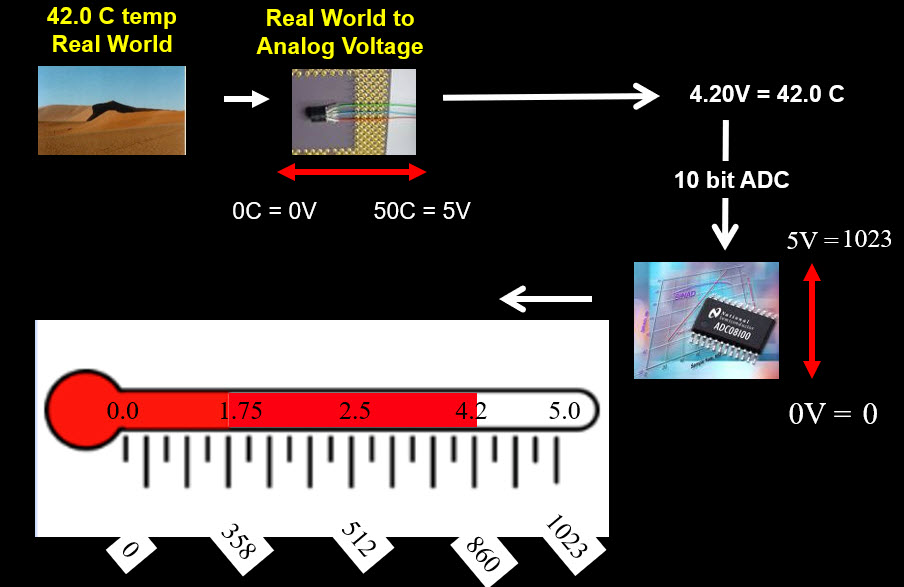
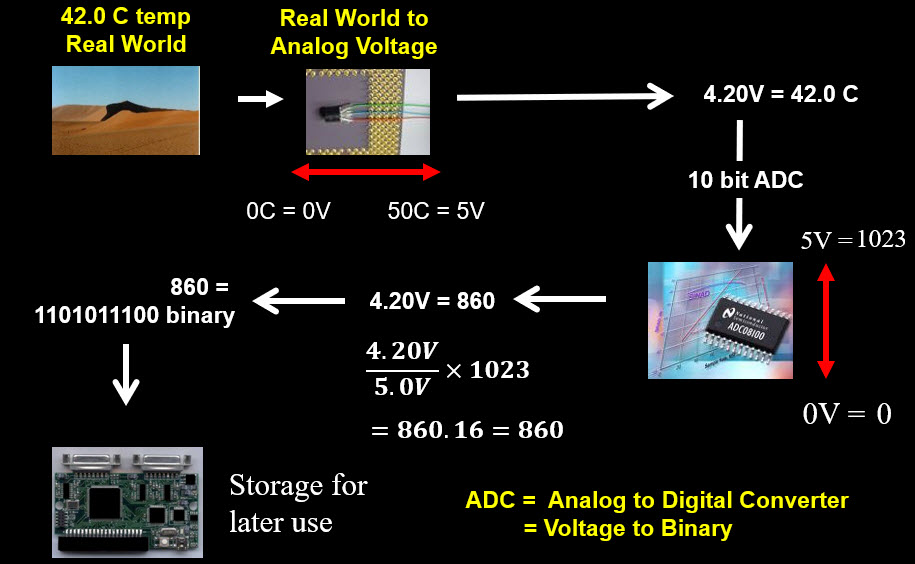
A program that uses Arduino to convert analog input to digital output (ADC).
Analog: continuous, real-world. ex) voltage, temperature, pressure, humidity...
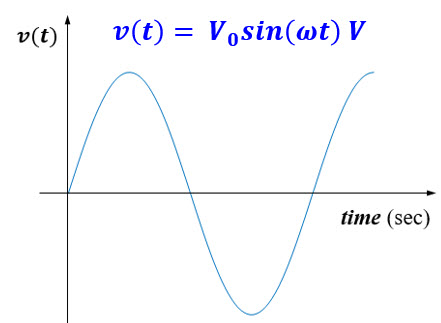
Digital: Bits and Bytes, On/Off, 1 or 0, high or low, non-continuous.

Arduino: Analog Vs. Digital
Arduino takes care of tith through the ADC

- Low resolution conversion (1 bit or 2 states)

- Higher resolution
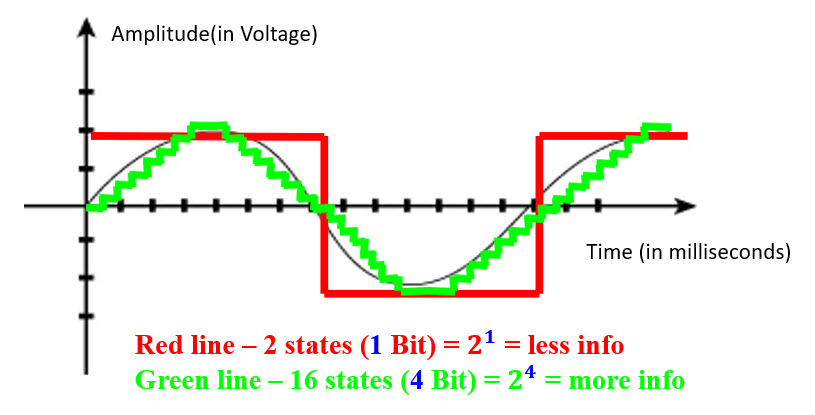
- A state is one unique combination of bits

- More bits provides more precision over a given voltage range.
- If it is necessary to record small changes, more precision (bits), is reuired.
- 8 bits is a byte
- 10 bits is how many bytes?
How many dots per inch (DPI) do yo need to communicae your message?

Do you need to know: Is something there or is it a circule?
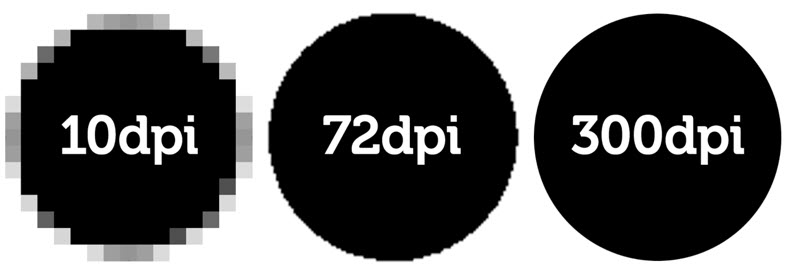
Level of Precision: Figure out what yo NEED to know
Say you wnat to hit a barn from 10 feet away with a rock. What do yo need to kkow to do that?

- Hit the varn Yes or No = one bit ▶ tow states
※ 0 = Miss, 1 = Hit
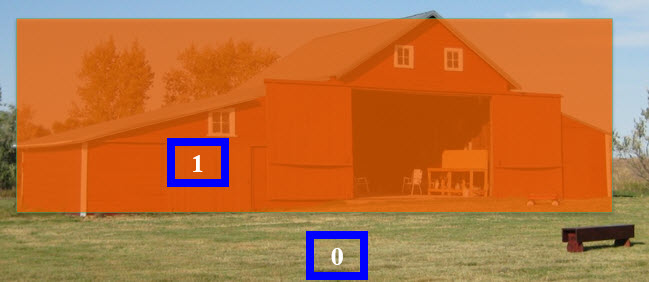
Say you want to know if you hit specific part of the barn…
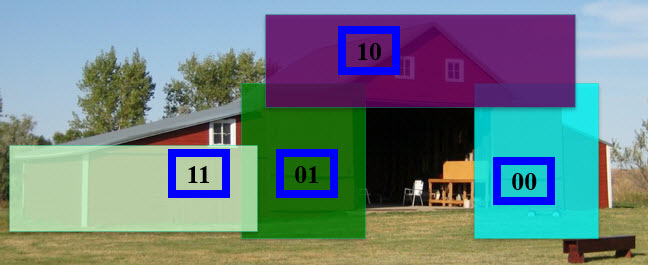
※ 00 = Right Barn Door
01 = Left Barn Door
10 = Roof
11 = Side barn
★ Two bits ▶ Four States
How many bits (states) does this knowledge require?
4 bits → 16 states

- More resolution costs more memory / storage / bandwidth
A state os one unique combination fo bits
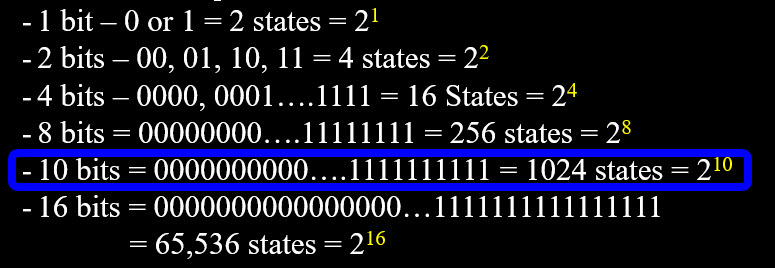
- More bits provides more precision over given voltage range
- If it is necessary to record small changes, more precision (bits) is required.
- 8 bits is a byte
- 10 bits is how many bytes?
What is the difference between 8 - bit and 10 - bit conversions?
- An 8 - bit conversion has 2 power of 8 (0 to 255) possible values
- 8 - bit Resolution is


- A 10-bit conversiton has 2 powr of 10 (0 - 1023) possible values.
- Resolution is

- For a device that is very precise, a 10-bit conversion allows for a higher resolution on the data (high-range accelerometers)

An example of Analog to Digital Conversion: Voltage to Binary